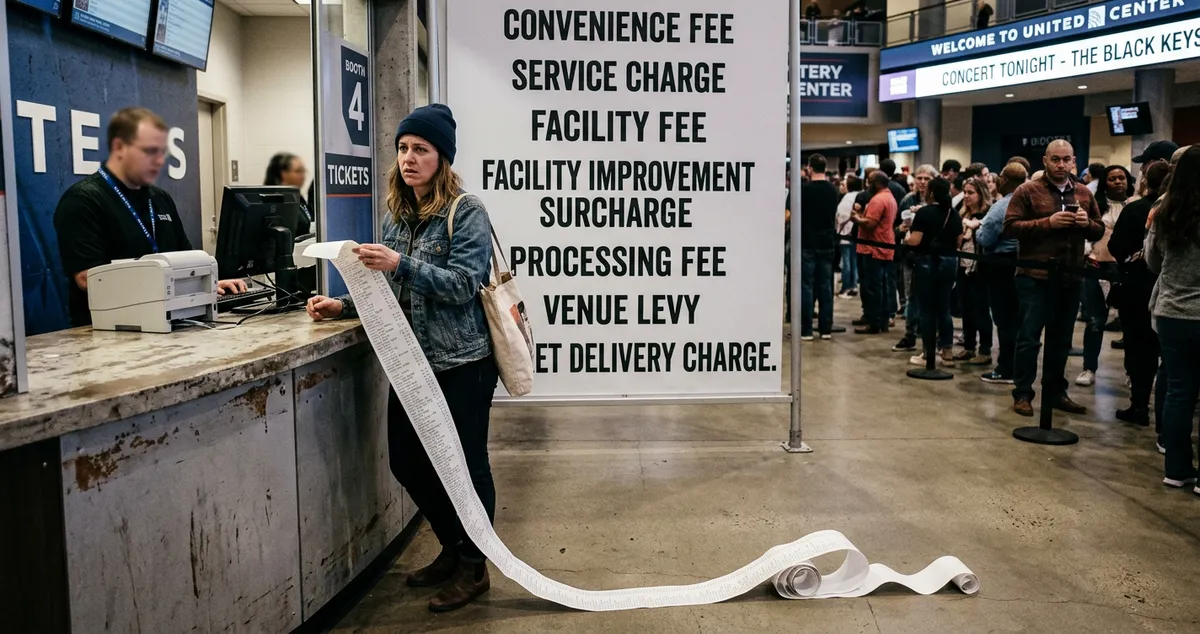
Live Nation Agrees to Divest 13 of Its Hundreds of Venues and Cap Fees at Only 15%, Illinois Calls This 'a Terrible Deal'
Live Nation Entertainment, the parent company of Ticketmaster and the entity that controls approximately 60% of the concert promotion market, 70% of major venue ticketing, and what feels like 100% of the experience of trying to buy tickets to anything, reached a tentative settlement with the Department of Justice this week. The terms of the agreement, which were announced with the kind of measured optimism that accompanies deals where one side got most of what it wanted, include three main provisions: Live Nation will divest 13 of the venues it owns and operates, other promoters will be allowed to book events at Live Nation venues and sell up to half the tickets through non-Ticketmaster platforms, and Ticketmaster will cap service fees at 15% at amphitheaters it owns. Fifteen percent. The cap is fifteen percent. I want to make sure that number is clear, because it is doing a lot of work in the settlement and it is a number that, depending on your perspective, represents either a meaningful concession or a rounding error on a receipt that was already too long.
To understand why Illinois Attorney General Kwame Raoul and the attorneys general of 32 other states called this settlement “a terrible deal” — their words, not mine, though I would not have chosen different ones — it helps to understand the scale of what is not being addressed. Live Nation owns or operates more than 400 venues globally. It is divesting 13. That is 3.25% of its portfolio, which is the kind of number that, in a corporate earnings call, would be described as “immaterial.” None of the 13 venues are in Illinois. The company will retain all of its Chicago-area properties, including its relationships with the United Center, the Byline Bank Arco, and the various amphitheaters and clubs where Chicagoans have been paying Ticketmaster fees since the company first figured out that you could charge people $14 for the privilege of buying something.
The fee cap deserves particular attention because it reveals something about the settlement’s theory of harm. A 15% cap on service fees sounds like a limitation until you realize that it applies only to amphitheaters that Ticketmaster owns and operates directly, which is a subset of the venues where Ticketmaster sells tickets. At venues Ticketmaster does not own but merely provides ticketing services for — which is most of them — the cap does not apply. More importantly, 15% is not low. If you buy a $100 ticket, the cap allows a $15 service fee. On a $200 ticket, that’s $30. The current average Ticketmaster service fee, according to a 2025 analysis by the Government Accountability Office, is approximately 27% of face value. The settlement cuts that roughly in half at owned venues and leaves it untouched everywhere else. This is the equivalent of a restaurant that has been overcharging you for bread agreeing to only moderately overcharge you for bread, but only at some of its locations.
The states that rejected the settlement — which include Illinois, California, New York, and 29 others — have announced they will continue their own antitrust lawsuits against Live Nation. Their position, as articulated in a joint statement, is that “anything short of structural separation of Live Nation and Ticketmaster fails to address the fundamental competitive harm.” In plain language: they want the merger undone. The 2010 merger of Live Nation and Ticketmaster, which the DOJ approved with conditions that Live Nation was later found to have repeatedly violated, created the vertically integrated monopoly that the current lawsuit is attempting to address. The settlement addresses it by asking Live Nation to be slightly less monopolistic, in specific ways, at specific venues, for a specified period. The states consider this insufficient. I am not a lawyer, but I did spend 45 minutes reading the settlement document, and I can report that it contains 27 references to “competitive markets” and zero references to “breaking up the company.”
For Chicago concertgoers, the practical implications are limited. Tickets to shows at the United Center, Wrigley Field, the Salt Shed, and most other major Chicago venues will continue to be sold through Ticketmaster or its subsidiaries. Fees will continue to appear at checkout as a series of line items — service fee, facility fee, order processing fee — that combine to produce a total that is meaningfully higher than the advertised price. The settlement does require Ticketmaster to display “all-in” pricing that includes fees upfront, which is a genuine consumer improvement, and which Ticketmaster had already begun implementing in some markets because several states, including Illinois, passed laws requiring it. So the settlement requires Ticketmaster to do something it was already being required to do by other laws, which is a theme of the document more broadly.
The seven states that chose to join the federal settlement rather than continue their own litigation include some smaller states with less at stake in the outcome — a calculation that the remaining 32, led by the larger states with more venues and more concertgoers and more attorneys general who would like to be seen as fighting monopolies, found unpersuasive. The trial, which had been paused pending settlement talks, is expected to resume shortly. Live Nation, in a statement, said it was “disappointed” that not all states had joined the agreement and that it “remained committed to working collaboratively.” A spokesperson for the company declined to answer specific questions about the 13 venues being divested, including whether any of them are profitable.
The situation, viewed from a considerable distance, has a certain structural clarity. The Department of Justice brought an antitrust case against a monopoly. The monopoly agreed to become a slightly smaller monopoly. Most of the states said that was not enough. The monopoly said it was disappointed. Everyone will now go to court, where lawyers will argue about market definitions and consumer harm while the rest of us continue to pay $43.50 in fees on a $75 ticket to see a band play at a venue that Ticketmaster does not own but does, in every practical sense, control. The trial is expected to last several weeks. Tickets are not yet available.