CTA Sues Federal Government Over Frozen $2.1 Billion, Contractor Deadline Tomorrow
The Chicago Transit Authority filed a federal lawsuit this week over $2.1 billion in frozen Department of Transportation funding for its two largest capital projects, placing the CTA in the legally unusual position of suing the government it depends on to pay for the trains it operates so people can avoid dealing with the government’s roads. A hearing date has not yet been set. The contractor demobilization deadline is tomorrow.
The two projects at stake — the Red Line Extension, which would bring rail service to the Far South Side neighborhoods that have been waiting for it since approximately the Eisenhower administration, and the Red/Purple Modernization, which would address the structural situation currently holding together the North Side elevated tracks through what engineers diplomatically call “persistent maintenance attention” — represent the most significant transit capital investment in Chicago’s history. The funding was frozen in late February as part of a broader federal review of transportation grants. The CTA says the freeze is unlawful. The DOT has not yet responded to the lawsuit in court.
“We are prepared to vigorously defend the rights of our riders,” said CTA President Dorval Carter in a statement that was notably low on the kind of soothing language transit agencies typically deploy when things are going fine. A CTA spokesperson declined to specify exactly what “vigorously defend” entailed in procedural terms but confirmed it included the lawsuit and “all available remedies,” which in transit-agency parlance covers a range of responses from further legal filings to press releases.
The contractor deadline creates what several transit policy observers called “a genuinely bad situation on a compressed timeline.” Under the terms of the project agreements, the CTA must notify its construction contractors by March 27 — tomorrow — if it cannot confirm continued funding, at which point the contractors would begin demobilization: removing equipment, releasing workers, and unwinding the complex procurement machinery that took years to assemble. Reassembling it, should the funding eventually be restored, would not be free or fast. A source familiar with major infrastructure procurement, speaking on condition of anonymity because they were not authorized to describe federal funding disputes as “a logistical nightmare you do not want to be inside of,” described it as “a logistical nightmare you do not want to be inside of.”
Chicago Mayor Brandon Johnson called the freeze “an attack on working families and on the infrastructure that connects them,” which is the kind of statement that sounds like it was drafted by committee and probably was. Alderpersons from the affected South Side wards were more direct. “The Red Line Extension has been promised to these communities for decades,” said one alderperson representing a ward in the project corridor. “If this funding evaporates because of a bureaucratic dispute, I don’t know what we tell people.” Several of her colleagues said they knew exactly what they’d tell people and their answers varied considerably depending on which way they face politically.
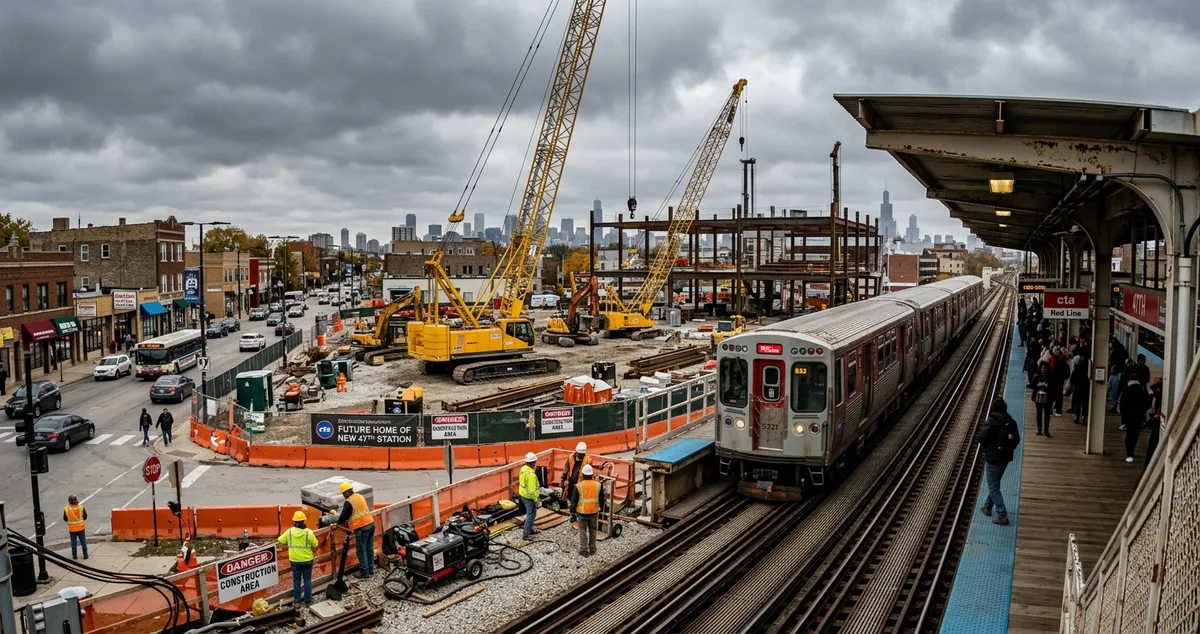
The Red Line Extension was to bring new stations through Roseland, Pullman, and into the far Southeast Side — communities that have organized, litigated, and lobbied for rail access for generations. Community advocates held a press conference Tuesday outside a future station site, which currently resembles a muddy construction staging area but which several speakers referred to as “a symbol.” One attendee, an 81-year-old Roseland resident named Mattie Bowen who said she had been attending Red Line Extension meetings since 2003, told reporters she was “not surprised, but I am mad about it.” She said she planned to stay mad about it.
The CTA’s legal complaint argues that the funding freeze violates the terms of existing grant agreements, which are binding federal contracts, and that the agency relied on those commitments in structuring its project timelines and contractor obligations. Legal experts who follow transit finance note that grant agreement disputes of this scale are unusual but not unprecedented, and that the courts have in past cases required federal agencies to honor funding commitments made under signed agreements. “There’s law here,” said one attorney who has handled federal transit litigation, with a tone that seemed calibrated to convey both confidence and the distinct possibility that confidence would not be enough.
A DOT spokesperson said the department was “reviewing the matter” and had no further comment. The contractor clock, as of press time, had not responded to requests for comment and continues to run regardless.