City Council's Bold Plan to Attract More Tourists: Make It More Expensive to Visit
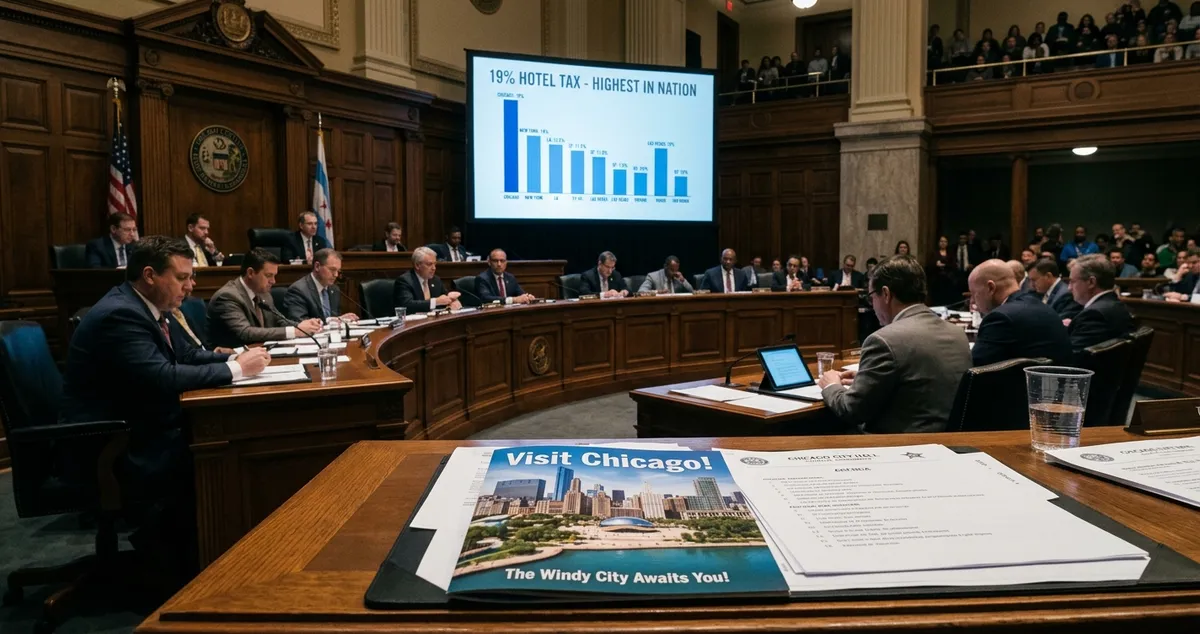
In a unanimous vote that presumably involved zero stays at Chicago hotels, the City Council approved a new Tourism Improvement District on Wednesday that pushes the city’s combined hotel tax rate to 19% — the highest in the nation, edging out New York’s 14.75% by a margin that can only be described as enthusiastic.
The new district covers downtown, McCormick Place, Hyde Park, and several other neighborhoods, and is projected to generate approximately $50 million per year. That money will be directed to Choose Chicago, the city’s tourism marketing arm, which will use it to produce advertisements encouraging people to visit a city that now charges them a 19% premium for the privilege of sleeping indoors.
“This is an investment in Chicago’s future as a world-class destination,” said Ald. Patricia Morales (25th), the measure’s lead sponsor, speaking from a podium flanked by glossy tourism brochures. “When visitors see what Chicago has to offer — the architecture, the lakefront, the dining — they’re not going to be deterred by a few extra dollars on their hotel bill.”
The math, however, tells a more colorful story. A family of four booking a standard room at a downtown hotel for three nights at $250 per night will now pay $142.50 in taxes alone — enough to cover a separate night at a Holiday Inn in Milwaukee, a city that is not Chicago but is also not charging you 19% for the reminder.
Hotel industry representatives offered the kind of measured response that suggested their prepared remarks had been edited several times. “We support efforts to promote Chicago tourism,” said David Kwon, a spokesperson for the Illinois Hotel & Lodging Association. “We do have questions about whether the most effective way to attract visitors is to make their stay meaningfully more expensive than comparable cities. But we support the effort.” He paused. “In concept.”
Convention organizers were less restrained. “We are already fielding calls from organizations evaluating whether to hold their 2027 and 2028 events here,” said one McCormick Place liaison who spoke on condition of anonymity because they were not authorized to publicly suggest the city had made a mistake. “The American Dental Association doesn’t have to meet in Chicago. They can look at teeth anywhere.”
The Choose Chicago campaign funded by the new tax is expected to launch this summer with a multimedia blitz across digital, print, and out-of-home platforms. Early creative concepts obtained by the Dispatch include the tagline “Chicago: Worth Every Penny (And There Are Now Significantly More Pennies)” — though a spokesperson said the final messaging is still being refined.
Supporters point to the district’s self-funding structure as an elegant solution: tourists pay the tax, the tax funds marketing, the marketing brings more tourists, who then pay more tax. Critics have noted that this is also the basic structure of a pyramid scheme, though Ald. Morales dismissed the comparison as “reductive” and “not understanding how tourism works.”
The measure takes effect July 1. Airbnb listings, which are subject to a separate and also very high tax structure, were not included in the new district, leading some aldermen to predict a follow-up ordinance by fall. “We’ll get there,” said Ald. Ray Fitzgerald (43rd), with the confidence of a man who has never personally paid a hotel tax in his own city. “One surcharge at a time.”