Chicagoans Hold Breath as Spring Equinox Approaches, Fully Aware March Has Lied Before
Tomorrow, at precisely 10:01 a.m. Central Daylight Time, the sun will cross the celestial equator and the Northern Hemisphere will, in the language of astronomy, begin its slow tilt toward warmth. This is the vernal equinox — the moment when day and night achieve a fragile, fleeting balance, and when the city of Chicago collectively holds its breath, because it has been hurt before.
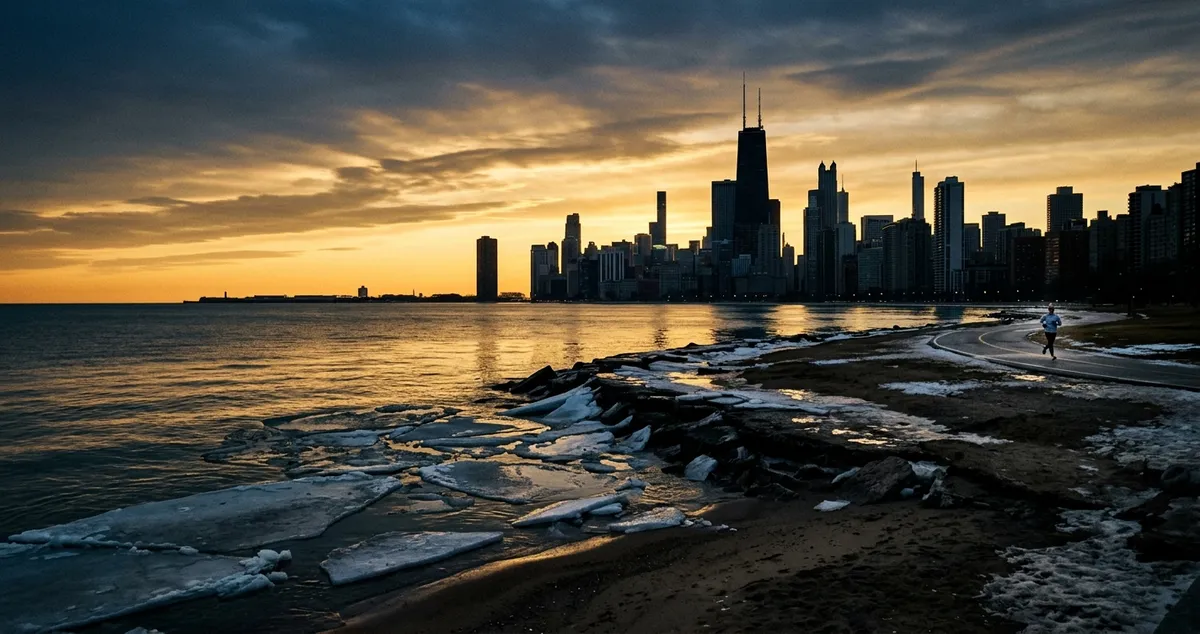
The signs, on paper, are encouraging. Wednesday’s high reached 52 degrees. The lakefront path, which as recently as last week resembled a grayscale photograph of a Soviet rail yard, now hosts joggers in shorts — tentative shorts, to be sure, paired with long sleeves and an expression best described as “hopeful but legally noncommittal.” The ice along the North Avenue Beach shoreline has retreated to a thin, crystalline fringe, cracking in the morning light like the last page of a story that isn’t quite finished.
But Chicago does not trust March. This is not cynicism; it is meteorological literacy. The National Weather Service’s own records show that the city has received measurable snowfall after March 20 in fourteen of the last twenty years. In 2018, a late-season blizzard dropped eight inches on a city that had already put away its shovels. In 2015, April opened with an ice storm. And every Chicagoan of a certain age can recite, with the solemnity of scripture, the date of the last truly devastating late snow — though the specific year varies depending on which neighborhood you ask.
“The equinox is a technicality,” said Dr. Priya Nair, a climatologist at the University of Illinois Chicago, when reached by phone Wednesday afternoon. “Astronomically, it marks the beginning of spring. Meteorologically, in Chicago, it marks the beginning of the period in which spring might eventually happen.” Dr. Nair added that average temperatures in the city don’t reliably stay above 50 degrees until mid-April, a fact she delivered with the calm resignation of someone who has been explaining this to reporters every March for the better part of a decade.
Along the Riverwalk, the seasonal transformation is visible in small, careful increments. The restaurant patios at the river’s edge have set out their chairs, but not their cushions — a hedge, a half-measure, a way of saying we believe in spring but we’re not betting the upholstery on it. A man walking a golden retriever near the Centennial Fountain paused to look at the water and said, simply, “It’s trying.” He did not elaborate, but his meaning was clear to anyone who has lived here long enough: the city is in negotiation with the season, and neither side has committed to terms.
The forecast for the equinox itself is 54 degrees and partly cloudy, which in Chicago constitutes a minor miracle — neither warm enough to celebrate nor cold enough to complain, occupying that narrow band of temperature where the only honest response is a shrug and a jacket draped over one arm, just in case. By Friday, temperatures may reach 58. By Sunday, they may drop back to 41. This is the rhythm. This is the deal.
There is a particular quality to Chicago light in late March that is difficult to describe and impossible to forget. It arrives low and golden in the early morning, catching the glass of the skyline at an angle that makes the buildings look provisional, as though the whole city were a sketch someone might still revise. It is the light of not-yet — of coats unbuttoned but not removed, of windows cracked but not opened, of a season that is arriving the way everything arrives in this city: late, loudly, and with no guarantee it will stay.
The equinox will come tomorrow morning at 10:01. The earth will tilt. The balance will shift. And 2.7 million people will step outside, feel the air on their faces, and make the same private, wordless calculation they make every year: Is it safe to hope yet? The answer, as always, is not quite. But almost. Almost.