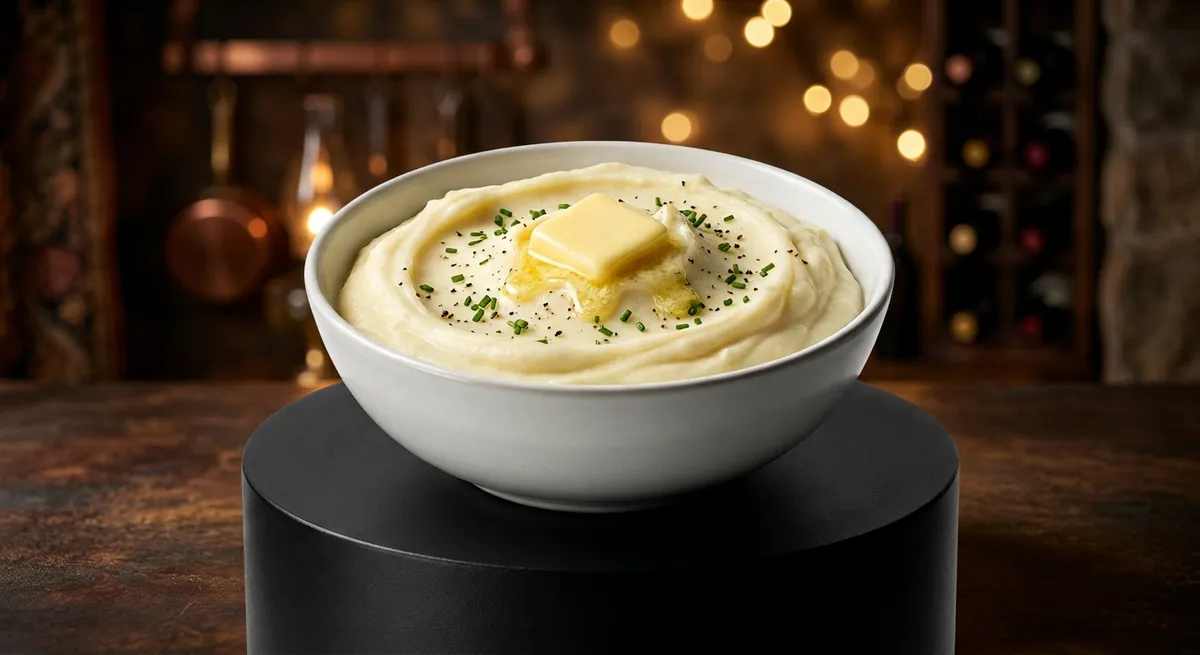
Local Startup Claims to Have Invented 'Smooth Potato Paste,' Seeks $40M Series A
A Fulton Market food-tech startup called Spudify announced Monday that it has developed a proprietary culinary process capable of transforming raw potatoes into what the company is calling “a smooth, warm, malleable potato paste” — and is now seeking $40 million in Series A funding to bring the product to mass market.
“We looked at potatoes, and we thought: what if they were softer?” said CEO and co-founder Brant Holloway, 29, who previously co-founded a blockchain-based dog leash company that he describes as having “pivoted gracefully.” “That question — that simple, radical question — is what started all of this.”
The company’s patent-pending process, branded internally as MashTech™, involves submerging potatoes in boiling water for approximately 20 minutes, then applying pressure via a handheld implement until the potato has been reduced to a uniform, paste-like consistency. A small amount of butter and salt are then incorporated using what Spudify calls its “FatFusion™ integration protocol.” In a press release, the company described the result as “a completely novel eating experience that no human being has ever encountered before, until now.”
The pitch deck, which circulated to investors this week, projects that Spudify will capture 12% of the global comfort food market within 18 months — a figure that the deck’s footnotes attribute to “internal modeling” and a survey of 34 people in the West Loop who agreed that the paste was “pretty good.” The deck also includes a slide titled “Why Potatoes, Why Now,” which analysts have described as either visionary or the longest two minutes they have ever spent in a conference room.
“Our data shows that 97% of consumers have eaten a potato in its natural, unmodified form,” said Chief Revenue Officer Lexie Park, citing a statistic that appears nowhere else in recorded human research. “But what if that potato was… different? What if it was crushed?” Park paused for effect. “That’s Spudify.”
Reaction from the culinary community has been cautious. Chef Marco Adamo of River North restaurant Vincento — who has been placing mashed potatoes on his menu in various forms for 22 years, as has effectively every restaurant in recorded history — said he was “not sure what to make of this.” He added that he makes what he calls “purée de pommes de terre” weekly, and has been doing so “without any rounds of venture funding.” Spudify’s legal team has since sent Vincento a cease-and-desist letter, citing potential infringement of its “Paste-First IP estate.”
The startup has also attracted attention for its branding choices. The product, sold in a matte black pouch with the tagline The Future of Starch, is priced at $18 per serving at its flagship pop-up in the West Loop, which opened last Thursday and currently has a 45-minute wait on weekends. Reviews on local food blogs have been mixed, with most describing the product as “exactly like mashed potatoes” and several explicitly noting that it “tastes just like my grandmother made” — a comparison that Spudify’s communications director called “a meaningful brand alignment opportunity.”
Holloway declined to discuss whether he was aware of the centuries-long prior art, citing ongoing patent proceedings. “We can’t speak to what other people claim to have done informally, in private, without documentation,” he said. “What we can say is that we are the first company to have productized this at scale, with a brand, and a deck, and a go-to-market strategy that includes activations.” When asked what activations meant, he said “events, basically,” and then asked if we could move on.
Spudify’s Series A round is being led by a venture firm that asked not to be named. The company expects to close the round by April, at which point it plans to begin R&D on what Holloway described only as “Phase Two” — gesturing vaguely at a whiteboard that had the word “GRAVY?” written on it in large capital letters, followed by three question marks.